

We talk about plastic waste a lot—and for good reason. It’s everywhere, and it’s a growing environmental problem.
Plastic has been part of everyday life since the early 1900s. It’s durable, versatile, and convenient. But while production has increased rapidly, waste management hasn’t kept up. Today, millions of plastic bottles and bags are used every minute, and only a small percentage is recycled.
The result? Almost all the plastic ever made still exists—much of it ending up in our oceans.
What Are Microplastics?

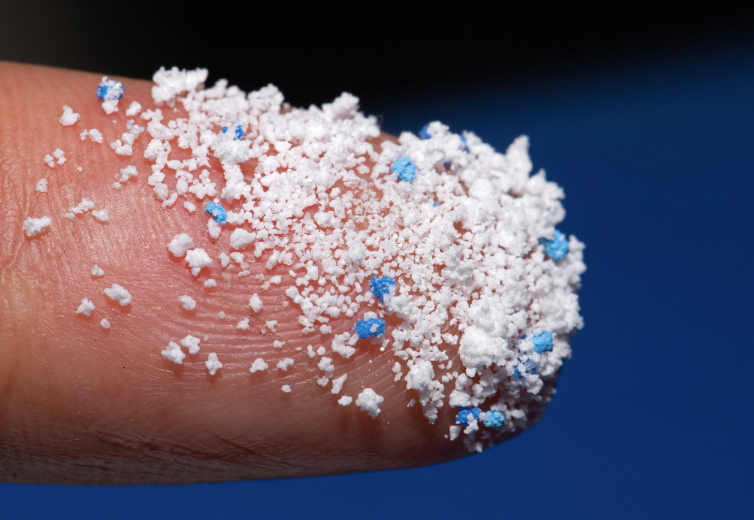
Microplastics are tiny plastic particles less than 5mm in size. They come from two main sources:
- Plastics intentionally made small (like some personal care products)
- Larger plastics breaking down over time due to sunlight, heat, and movement
Another major source is microfibres, which are released when synthetic textiles are washed.
Because they’re so small, microplastics are now found almost everywhere—from oceans and marine life to drinking water, food, and even the air we breathe.
What do we know about the impact of microplastic so far?
Studying microplastics is a relatively new but rapidly growing field of investigation. In 2014 it was reported that more than 5.2 trillion particles of plastic were swirling in the planet’s oceans1.
Being so small means microplastics get everywhere, and it’s not only marine life that’s being impacted, microplastics have been found in flying insects, beer and even honey. An investigation carried out by Orb Media also found microplastics in 83% of tap water samples around the world4.
The Hidden Impact of Everyday Cleaning
Many households still rely on single-use plastic bottles and chemical cleaning products. Over time, this creates a significant amount of plastic waste that eventually breaks down into microplastics.
Switching to more sustainable options can make a real difference.
About ENJO and microplastics

For those who don’t know, ENJO is a sustainable, chemical-free cleaning range that allows households around the world to clean their home with just water and fibre cleaning products.
How can ENJO clean without harsh chemicals? The answer is patented fibre technology, which works to effectively loosen, lift, trap and remove dirt and bacteria.
To be able to produce effective fibre cleaning technology, ENJO products are made from a mix of five raw materials, polyester, acrylic, polyamide, viscose and cotton. Yep, they contain plastic.
This combination of raw materials varies depending on the cleaning products purpose and intended surface, however, it’s the polyamide and polyester that maximise ENJO’s cleaning power with wedge-shaped fibres 100 times finer than a human hair.
Do ENJO products generate microplastics?

ENJO take their impact on the planet seriously, we proudly offer a sustainable way to clean Aussie homes. So when Scientists first started to realise microplastics were being released from synthetic textiles, ENJO International conducted an investigation into the release of microplastics from ENJO products.
Microplastics | ENJO vs chemical cleaning products

ENJO cleaning products are handmade and extremely durable as they are designed to not only eliminate chemicals but reduce waste by being reusable for 3 years. Being reusable means ENJO products need to be washed, and this is how they generate microplastics, but how much microplastic do ENJO products produce?
A household using the the ENJO Starter Bundle washes approximately 100kg of ENJO products per year, that’s around 2kg per weekly load. ENJO International testing indicates that washing 100kg of ENJO products generates 16g of microplastic per year, which is the equivalent of 7 grains of rice.
So if you clean your home with ENJO for 3 years (the lifecycle of your ENJO products), you’ll generate 48g (or 21 grains of rice) of microplastics.
What about cleaning with chemicals?
If a household uses 25 plastic bottles of various cleaning detergents in a year, they are producing 1500g of plastic waste, plastic that eventually ends up in a landfill and breaks down slowly over time causing a myriad of problems for the planet and eventually becoming microplastic.
Over three years that’s around 4500g of plastic waste equating to around 94 times more waste when compared to ENJO.
What happens to ENJO products after 3 years?

ENJO products are long lasting, but like most textiles, they won’t last forever.
Tests carried out by ENJO International show that after 3 years the fibres become less effective at cleaning surfaces and actually tend to shed more fibres making it important to refresh them.
Do ENJO products end up as waste?

No. We're passionate about reducing household waste, it’s important to us that old ENJO products don’t end up contributing to a landfill.
How do I stop my old ENJO products becoming waste?
When the time comes to refresh your ENJO cleaning products, so you can send us your old ENJO hardware and fibre products. It is as easy as taking your clean, dry old fibres to your local Australia Post and return them to:
ENJO RECYCLING
Reply Paid 4234
Myaree BC WA 6960
Once we’ve collected enough old fibres, we send them to UPPAREL for recycling. Find out more about our recycling program here.
A Smarter, More Sustainable Way to Clean
ENJO offers a simple, effective alternative to traditional cleaning.
With ENJO’s reusable fibre cleaning products, you can clean your home using just water—no harsh chemicals required. This helps reduce both plastic waste and chemical use in your home.
Why choose ENJO?
- Reduces reliance on disposable plastic cleaning bottles
- Uses reusable, long-lasting cleaning products
- Supports a chemical-free cleaning routine
- Helps minimise household waste and environmental impact
While reusable textiles can release small amounts of microfibres during washing, their overall footprint is significantly lower than constantly using single-use plastic products.
How to Reduce Microplastics at Home
In 2015 a team of researchers trawled a mess growing in our ocean named the Great Pacific Garbage Patch and identified that 99.9% of the items pulled from the ‘patch’ (which is estimated to be the size of California) was plastic5.
The majority of this plastic isn't microplastic, yet, but it's only a matter of time. This is why actively trying to minimise our daily impact is important, here are some ways we can all help.
Tackling microplastics doesn’t require a complete lifestyle overhaul—small, simple changes can add up:
- Switch to reusable cleaning products like ENJO
- Avoid single-use plastics where possible
- Wash clothes only when needed
- Use shorter, gentler wash cycles
The Guppy Friend wash bag and Cora Ball are both designed to capture microplastics released in the wash, preventing them from going down the drain and into our waterways.
- Choose high-quality, long-lasting textiles
- Air dry clothing instead of using a dryer
- Support sustainable and eco-conscious brands

The Bottom Line
Plastic pollution—and microplastics in particular—is a complex global issue. But the choices we make at home matter.
By switching to ENJO’s sustainable cleaning system, you can reduce plastic waste, cut down on chemicals, and take a meaningful step toward a cleaner, healthier planet.